GETTING STARTED
Home
Starting A Sewing Machine
Servicing Business UK
Things To Think About

Set It Up Your Way
Starting a sewing machine servicing and repair business, whether full time or part time, is very straightforward when planned out properly. Another major advantage is that, so long as you have a well lit space to work, it is not expensive to provide the basic toolkit you need to get started.
If you are a fairly patient person with an interest in things mechanical there is absolutely no reason you can't look at sewing machine servicing as a new skill.
There's A Huge Demand
Currently in the UK there is a huge local demand for sewing machine servicing which gives you the opportunity to take on as much, or as little, as you want - particularly in the early stages of offering a service.
How To Learn
To start the learning process you need to understand how a sewing machine - pretty much all sewing machines - works. You can do this by watching YouTube videos, reading books, or best of all, taking machines apart to see and feel how they are put together and how the mechanisms work. A combination of any of these will get you started quite quickly.
I'm Talking Servicing
At this point I would emphasise that I am talking about learning to carry out sewing machine services on well known brands not sewing machine repairs. If you are new to the sewing machine world my suggestion would be to cut your teeth on servicing and take on repairs once you have some experience. I say well known brands because there are some really cheap and flimsy makes and models which I understand can be difficult to service and calibrate. The other area I avoid is electronics and complex computerisation, like embroidery machines, which in my view is for main dealer trained technicians to deal with.
Doing A Course
As a newcomer to sewing machine servicing in the UK you will come across various online and face-to-face courses and schools. I can’t speak for these as I have no experience of their offerings, however, I have heard good things about Sewing Doc Academy, and Artizan Training If your preferred way of learning is to be lead step-by-step it may well be worth checking them out, however, in my own experience I did not need to go that route. The other thing to be aware of is the certification some of the schools offer. To my knowledge there is no recognised sewing machine technician qualification available in the UK. I may be wrong.
Sewing Machines Are The Same But Different!
One major point to be aware of from the outset is, that unless you only service one model of machine, and some technicians do, you will rarely come across a similarly constructed machine twice! Screws are in different places, the covers come off in a different way, the gearing is different. Even when you service a similar model of the same make various things will be different - particularly when stripping the machine down.

Where To Find Machine Information
Online there are masses of detailed free videos and manuals which cover particular aspects of servicing tasks. Janome, the world’s largest sewing machine manufacturer, offers some excellent short service videos, particularly for older models. Evidently these are produced for Janome service technicians to refer to when faced with a particular adjustment or repair.
Service manuals are also very detailed, again for technicians. Some even take you step-by-step through the process of dismantling part of the machine to get at a particular part or mechanism. As mentioned earlier, machines can be so different, so knowing where to find help and guidance, and how it is laid out will be very beneficial.
YouTube Experts
It would be pretty pointless to identify one particular YouTube video expert because there are so many who offer excellent step-by-step guidance. For books, I would strongly recommend The Sewing Machine Master Guide From Basic To Expert by Clifford L. Blodget. It is exceptionally informative, nicely laid out, and in the UK at least, very reasonably priced.
I found videos worth watching are those by Terry at Sewing Machine Repairs UK, In Stitches, Randy The Sewing Machine Man, Sewing Machine Repair Guy, Abbi’s Den, Keith Lord, Sewing Machine Tips & Tricks and David Calkin.
Learning By Doing
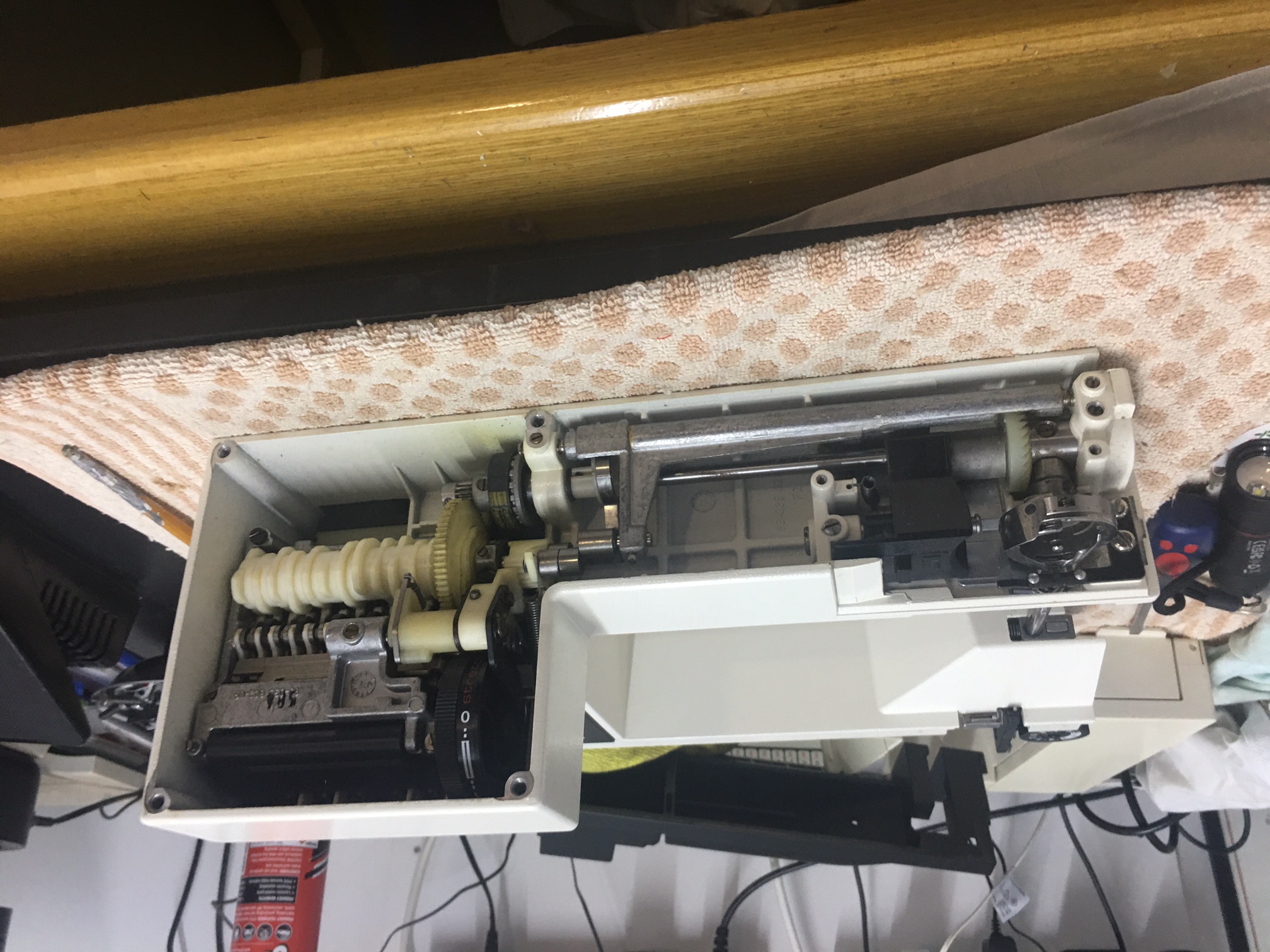
Going back to an earlier point, I learn best by ‘doing’, so initially I put a request on Facebook for donations of any old, unwanted sewing machines. I got about six which I then dismantled following points and guidance in YouTube videos and the book mentioned above. I was surprised how much I learned and how quickly I started to understand how and where to look to carry out a basic ‘strip down’ sewing machine service.
Get Some Decent Tools
One thing I realised was that I needed some better tools and equipment. Nothing expensive or fancy, just some decent screwdrivers, a couple of pairs of tweezers, some strong plastic pryer levers, a lint brush, (I like to use a small headed, cheap, acrylic paint brush), a purpose-made sewing machine white oil bottle, a small, powerful vacuum - I don't use blown air. Add to this some Universal sewing machine needles and a couple of spools of good quality thread and you are away!
Other than universal needles, thread, and various screws, I don't keep any spares. Nearly every machine you work on will be different and, other than bobbins and bobbin cases, specific parts or spares will be needed. However, for most services I rarely need to order anything new.
In Most Cases The Answer Is Simple
Final point-ish! On the forums you will often see suggestions that an issue is down to machine timing or something else that needs some form of internal adjustment. It rarely does. Generally following the well-publicised lists of common causes of sewing machine problems will provide a - very simple - answer. These are online, in sewing machine service publications, and often most comprehensively, in the better model User Manuals.
Testing Stitching & Tensions
I am very fortunate that my wife is an experienced machinist who is very happy to help carry out test stitching once a machine has been serviced. We don't do anything fancy, just straight stitch and zigzag. However, we make a point of using clearly contrasting coloured good quality thread - in our case Gutterman - so that, if needed, we can fine tune tensions to achieve the best results. Once we are happy, we leave a test piece under the presser foot for the customer to see.
Neil at Sewing Machine Service Ely. (sms-ely.co.uk)
There's more here!!
Please Text or WhatsApp 07702 505 703 if you have a question.
This page is at https://sms-ely.co.uk/start-sewing-machine-servicing.html
© 2024 & 07/2025 - Page by Neil Ford for Sewing Machine Service Ely, Cambridgeshire. All Rights
Reserved